About Northern Sea Oats
Northern Sea Oats (Chasmanthium latifolium)
River Oats, Wild Oats, Inland Sea Oats
Full shade to part sun, medium to moist moisture, tolerates heavy clay and periodic flooding, pH 5.0-7.5.
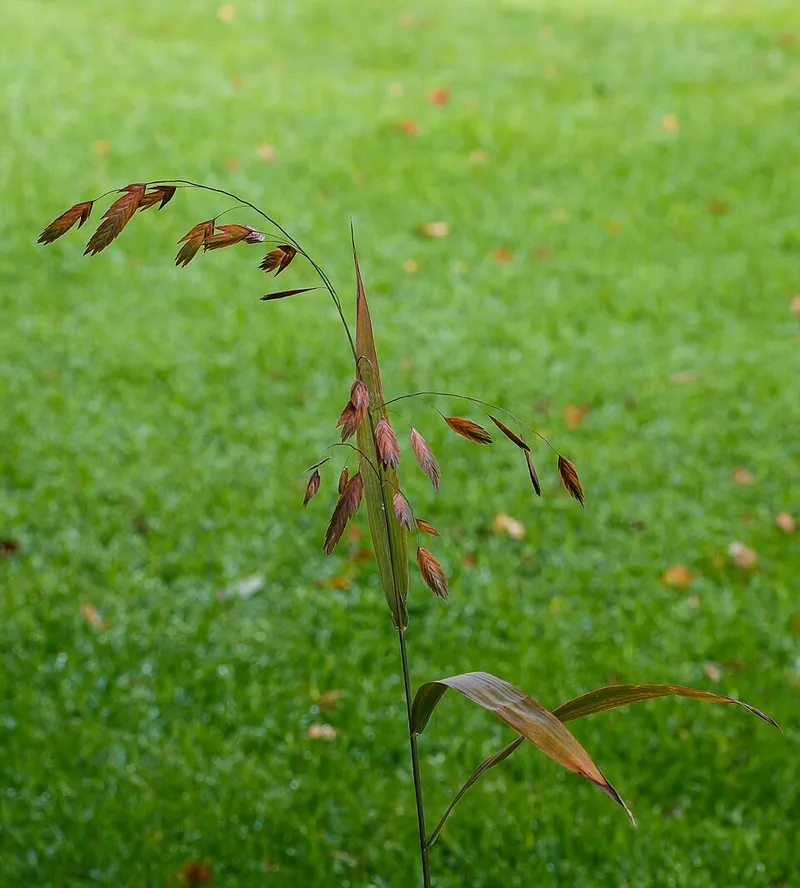
2-4 feet tall; blooms July-September with distinctive flat, oat-like seed heads that hang in drooping clusters and rattle in wind; cool-season tendency with warm-season growth peak; spreads aggressively by both rhizome and prolific self-seeding; foliage turns copper-bronze in fall.
No pretreatment required (Germination Code A); seeds sprout readily in moist soil, and self-seeding becomes the primary management challenge in garden beds.
Native region: Statewide in Tennessee, common along stream banks, moist woodland floors, and shaded ravines throughout Middle Tennessee.
Chasmanthium latifolium is one of the most reliably shade-tolerant ornamental grasses for Middle Tennessee, performing in sites where most grasses fail, including north-facing slopes, dense riparian corridors, and the deep shade of residential oaks. However, its self-seeding is aggressive enough that it can overtake a mixed shade border within a few seasons; plant it in contained beds, as a mass on a shaded bank, or where competition from other plants will check its spread. Deadheading before seeds mature reduces dispersal significantly. The flat, pendant seed heads are ornamentally distinctive and dry well for arrangements. High deer browsing pressure in some areas; not reliably deer-resistant in Columbia-area neighborhoods.
Quick Facts
- Common Name
- Northern Sea Oats
- Scientific Name
- Chasmanthium latifolium
- Plant Type
- Ornamental Grass
- Region
- Middle Tennessee