About Chinese Juniper
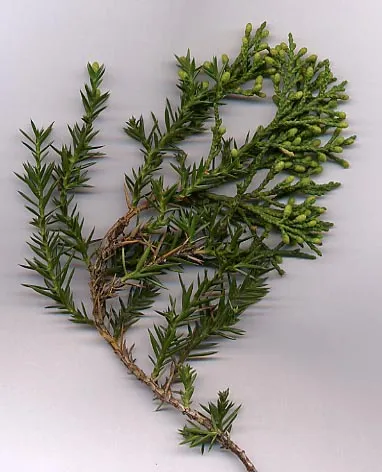
Chinese Juniper (Juniperus chinensis)
Chinese Juniper
Full sun, dry to moderately moist, well-drained soils required; tolerates clay only with good surface drainage; pH 5.5-8.0; very drought tolerant once established.
Highly variable by cultivar: spreading types ('Pfitzeriana', 'Sea Green') reach 4-6 feet tall and 6-10 feet wide; upright forms ('Spartan', 'Torulosa') reach 15-25 feet; flowers inconspicuous; fleshy, blue-gray cones (false berries) ripen in the second year.
Propagation: hardwood cuttings in late fall; semi-hardwood in summer under mist.
Native region: Not native to Tennessee; ornamental introduction from China, Mongolia, and Japan.
Chinese juniper cultivars are among the most common conifers in Middle Tennessee commercial and residential landscapes. Bagworm (Thyridopteryx ephemeraeformis) is the primary threat, populations build rapidly through June and July, and heavily infested plants can be completely defoliated; once feeding stops in August and the bags are sealed, insecticide is ineffective. Hand-removal in fall and early spring when bags are visible and before eggs hatch gives the best control. Cedar-apple rust (Gymnosporangium juniperi-virginianae) uses junipers as an alternate host, producing orange gelatinous horns on branches in wet spring weather; proximity to apple or crabapple trees increases pressure. Avoid excessive nitrogen fertilization, which promotes succulent growth more attractive to scale insects.
Quick Facts
- Common Name
- Chinese Juniper
- Scientific Name
- Juniperus chinensis
- Plant Type
- Shrub
- Region
- Middle Tennessee