About Burning Bush
Burning Bush (Euonymus alatus)
Winged Euonymus, Winged Spindle Tree
Full sun to part shade; medium moisture, well-drained; tolerates clay once established; pH 6.0-7.5.
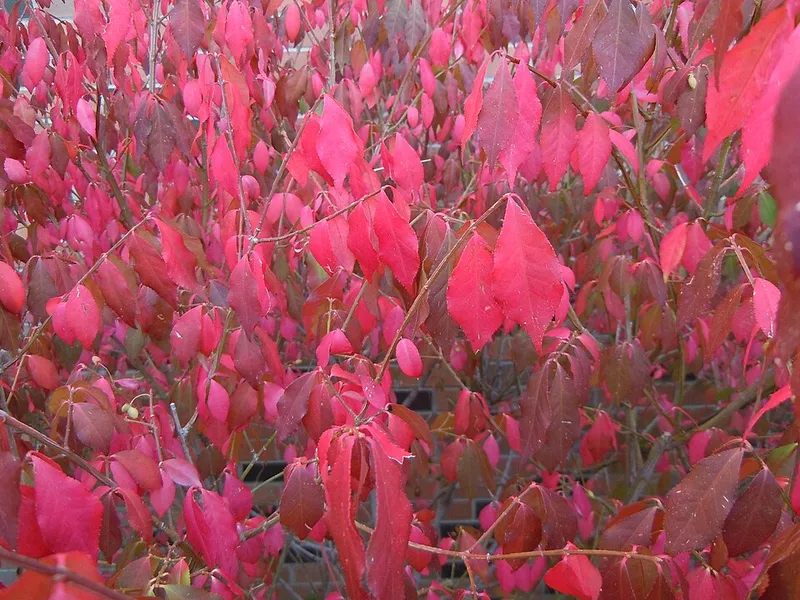
6-10 feet tall and wide (species type); compact cultivar 'Compactus' reaches 4-6 feet; deciduous; fall color is the primary ornamental feature, leaves turn vivid scarlet-red in October-November; inconspicuous spring flowers; reddish-orange capsule fruits with orange arils in fall; spreads by bird-dispersed seed.
Propagation: softwood cuttings in early summer; semi-hardwood cuttings in late summer.
Native region: Not native to Tennessee; introduction from northeastern Asia. Listed as invasive by the Tennessee Exotic Pest Plant Council; banned from sale in some northeastern states.
Burning bush delivers reliable, vivid fall color in Middle Tennessee, one of the most consistently brilliant red fall displays of any deciduous shrub in Zone 6b/7a. However, like Japanese privet, it is an established invasive species in Tennessee forest edges and disturbed areas, where birds distribute seed from landscape plantings into natural vegetation. The corky-winged stems are a distinctive identification feature year-round. Scale insects (Unaspis euonymi, the euonymus scale) are a recurring pest in Middle Tennessee, appearing as white elongated scales on stems and causing yellowing and dieback, a dormant oil spray in late winter before bud break, followed by a summer spray, manages heavy infestations. For fall red color without invasive risk, Itea virginica 'Henry's Garnet' and native Fothergilla species are alternative choices for Middle Tennessee landscapes.
Quick Facts
- Common Name
- Burning Bush
- Scientific Name
- Euonymus alatus
- Plant Type
- Shrub
- Region
- Middle Tennessee