About Petunia
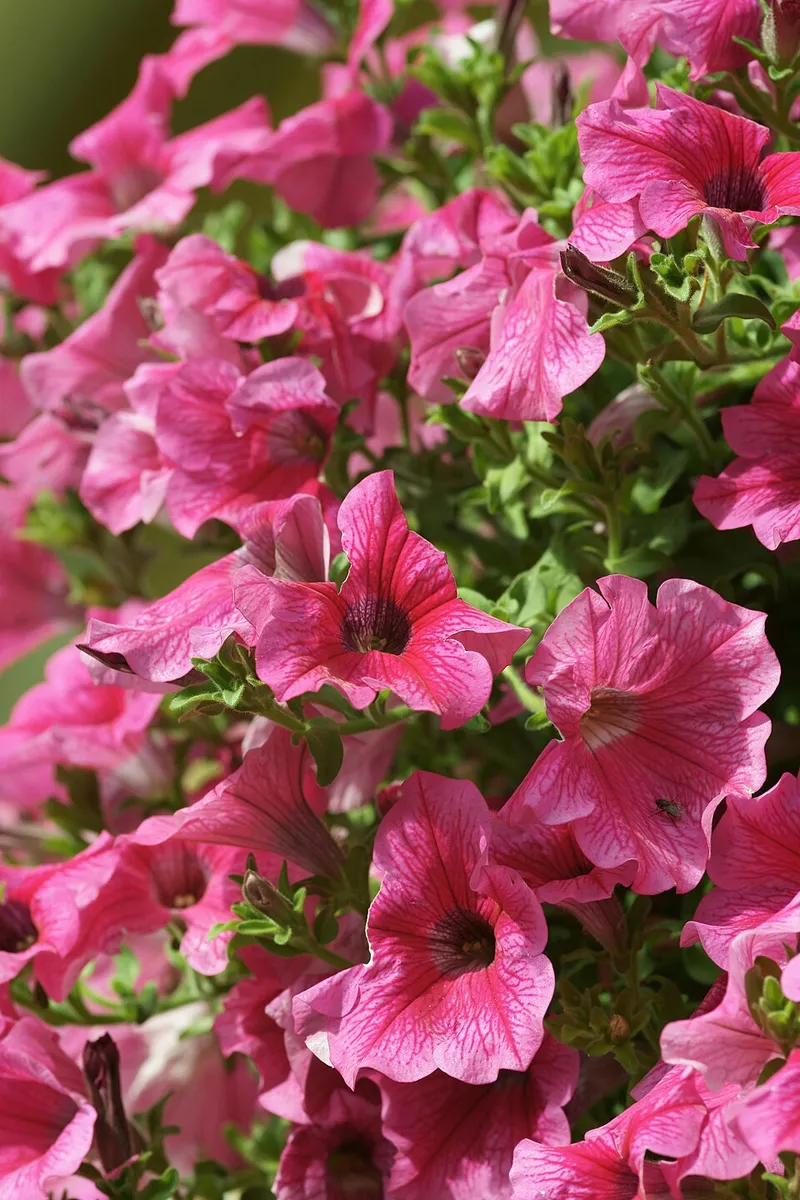
Petunia (Petunia x hybrida)
Garden Petunia
Full sun; medium moisture, well-drained; moderately drought-tolerant once established; pH 6.0-7.0.
6-18 inches tall, 12-36 inches wide depending on type (grandiflora, multiflora, milliflora, spreading/wave); blooms spring through frost in virtually every color except true orange; trailing types spread 24-36 inches; upright types 12-18 inches.
Propagation: start from seed indoors 10-12 weeks before last frost, surface-sow (needs light); most commercial cultivars are vegetatively propagated; purchase transplants in spring.
Native region: Not native to Tennessee; complex hybrid derived from South American species.
In Middle Tennessee, petunias bloom reliably from transplant in April through October but require mid-season attention to sustain performance. By late June, stems become leggy and bloom declines, cutting plants back by one-half, followed by a balanced liquid fertilizer application, restores compact form and triggers a flush of new bloom within 3-4 weeks. Botrytis cinerea gray mold and crown rot are the primary disease problems in wet, humid conditions; grandiflora types with large flowers are more susceptible than multiflora or wave types. Tobacco budworm (Chloridea virescens) is the most significant insect pest in Tennessee, feeding inside buds before they open, Bt sprays at first bud-damage sign are the standard organic response. Wave and Supertunia types tolerate Middle Tennessee's summer conditions better than large-flowered grandifloras.
Quick Facts
- Common Name
- Petunia
- Scientific Name
- Petunia x hybrida
- Plant Type
- Shrub
- Region
- Middle Tennessee