About Blue Daze
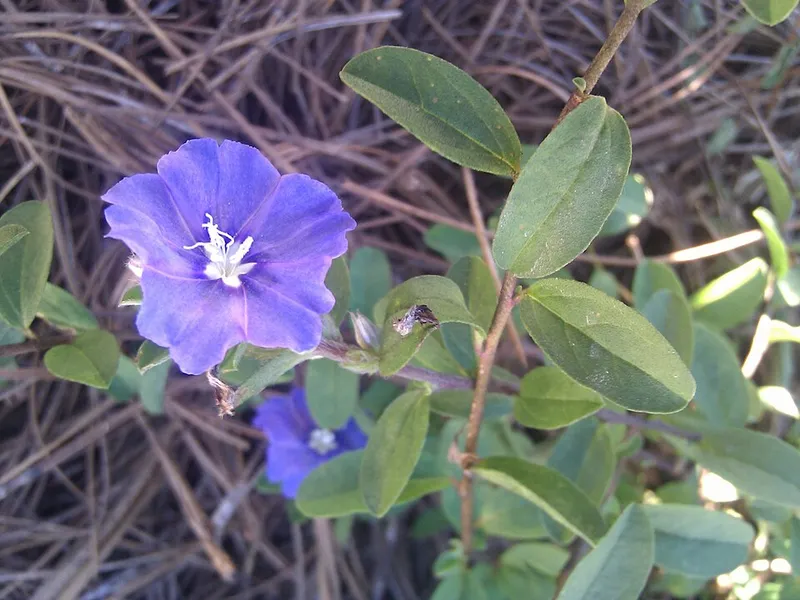
Blue Daze (Evolvulus glomeratus)
Brazilian Dwarf Morning Glory
Full sun; medium to dry moisture, well-drained to sandy soil; poor drainage is the primary failure mode; pH 6.0-7.5.
6-12 inches tall, 12-24 inches wide, trailing-mounding; blooms continuously from late spring through frost with small sky-blue flowers opening each morning and closing by afternoon; does not set viable seed, propagated by cuttings only.
Propagation: tip cuttings root readily; treated as a frost-tender annual in Zone 6b/7a, plants are killed by first frost.
Native region: Not native to Tennessee; ornamental introduction from Brazil and tropical South America.
In Middle Tennessee, E. glomeratus is one of the few reliable true-blue annual groundcover options for sunny, well-drained sites. The critical failure point is drainage, even a single day of saturated soil can cause stem rot at the crown, a common problem in Middle Tennessee's clay-heavy residential lots after heavy summer rains. Raised beds, rock gardens, or container plantings on patios consistently outperform in-ground planting in heavy soil. Flowers open each morning and close in afternoon heat or overcast conditions, this is normal behavior, not a stress response. Drought-tolerant once established; overwatering in clay is more damaging than underwatering. No significant insect pest issues in Tennessee.
Quick Facts
- Common Name
- Blue Daze
- Scientific Name
- Evolvulus glomeratus
- Plant Type
- Shrub
- Region
- Middle Tennessee