About Beauty Bush
Beauty Bush (Kolkwitzia amabilis)
Beautybush
Full sun, dry to moderately moist, well-drained soils; tolerates clay with good drainage; pH 5.5-7.5; drought tolerant once established; does not tolerate wet feet.
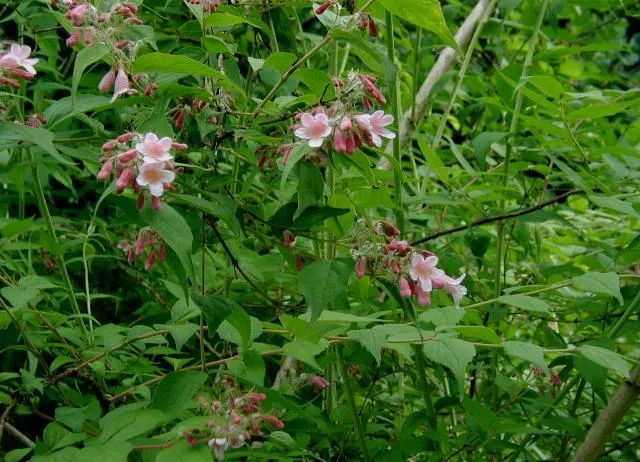
6-10 feet tall and wide; blooms May-June with profuse pink tubular flowers with yellow throats along arching stems, one of the heaviest-blooming late-spring shrubs; deciduous with exfoliating tan bark providing winter interest; spreads by suckers and layering.
Propagation: softwood cuttings in early summer; hardwood cuttings in late fall.
Native region: Not native to Tennessee; ornamental introduction from central China.
Beauty bush performs reliably in Middle Tennessee landscapes across a broad range of soils, provided drainage is adequate. It flowers on the previous season's growth, so pruning immediately after bloom in June allows a full season of new wood development for the following year's display, fall or winter pruning eliminates most of the flower buds. Older plants develop an open, arching form that can look unkempt when not pruned; removing one-quarter to one-third of the oldest canes to the base each year after bloom maintains vigor and a tighter habit. No significant pest or disease problems affect established plants in Tennessee. The arching stems and dense structure provide nesting sites for songbirds. Powdery mildew can develop on foliage in humid summer conditions but does not threaten plant health.
Quick Facts
- Common Name
- Beauty Bush
- Scientific Name
- Kolkwitzia amabilis
- Plant Type
- Shrub
- Region
- Middle Tennessee