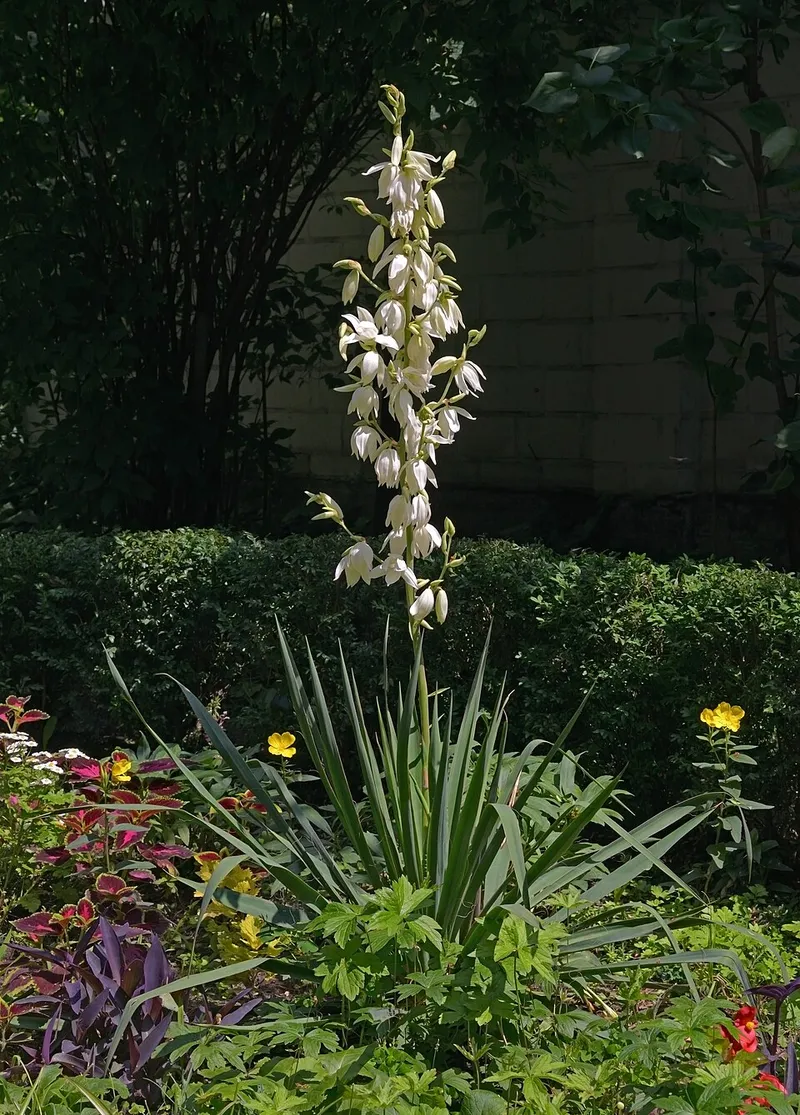
About yucca
Yucca (Yucca filamentosa)
Adam's Needle, Bear-grass
Full to part sun, moderately dry to dry moisture, prefers sandy soil but accepts loam or heavy clay; circumneutral pH. 1-2 feet foliage height with a 4-foot flower spike; blooms in early summer with white flowers; spreads by seeds and through underground root system to form small clumps.
Germination Code: A. Soak seed in hot water overnight before planting.
Native region: Scattered lightly statewide except absent in the northeast corner of Tennessee.
Fragrant flowers with striking foliage. Plants are hardier when grown in poor, sandy soils. Flower stalk should be removed once flowers drop. Best method of propagation is division. Pollinated by yucca moths (Tegeticula spp.), which have a mutualistic relationship with the plant, the moth larvae feed on the seeds, but enough seeds remain to ensure reproduction. In Middle Tennessee landscapes, Y. filamentosa is one of the few ornamental perennials that performs without supplemental irrigation in compacted clay soils along roadsides and in parking lot islands. The sharp leaf tips are a hazard in high-traffic areas; site away from pedestrian paths.
Quick Facts
- Common Name
- yucca
- Scientific Name
- Yucca filamentosa
- Plant Type
- Perennial
- Region
- Middle Tennessee