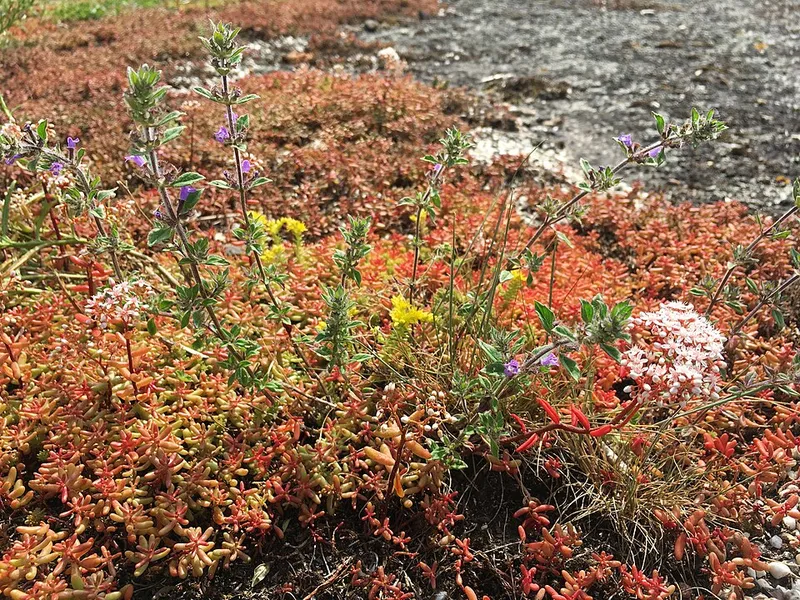
About sedum
Sedum (Sedum spp.)
Full sun to part shade, dry to medium moisture, tolerates rocky, sandy, or loamy soil; excellent drainage is required, sedums rot quickly in waterlogged or poorly drained clay.
Height varies widely by species: low-growing groundcover types (e.g. S. ternatum, S. pulchellum) reach 3-12 inches; upright border types (e.g. S. spectabile, S. telephium) reach 18-24 inches; bloom season ranges from spring through fall depending on species; flower colors include white, pink, yellow, and red; spreads by self-seeding, stem fragments, or stolons.
Native region: Two Tennessee native species are notable: Sedum ternatum (Woodland Stonecrop) occurs in Middle and East Tennessee on shaded rocky outcrops; Sedum pulchellum (Widow's Cross) is widespread across the Highland Rim and Central Basin on limestone glades.
The Sedum genus spans a wide range of habits, distinguishing among species matters for site selection. Native species (S. ternatum, S. pulchellum) are adapted to the thin limestone soils of Middle Tennessee glades and thrive where drainage is perfect. Introduced upright types (S. spectabile, commonly called 'Autumn Joy' or 'Autumn Fire') tolerate somewhat heavier soils but still fail in poorly drained clay flats. The primary threat in Middle Tennessee is summer Phytophthora crown rot in sites that hold moisture after rain. Monarch butterflies and native bees work fall-blooming upright sedums heavily.
Quick Facts
- Common Name
- sedum
- Scientific Name
- Sedum spp.
- Plant Type
- Perennial
- Region
- Middle Tennessee