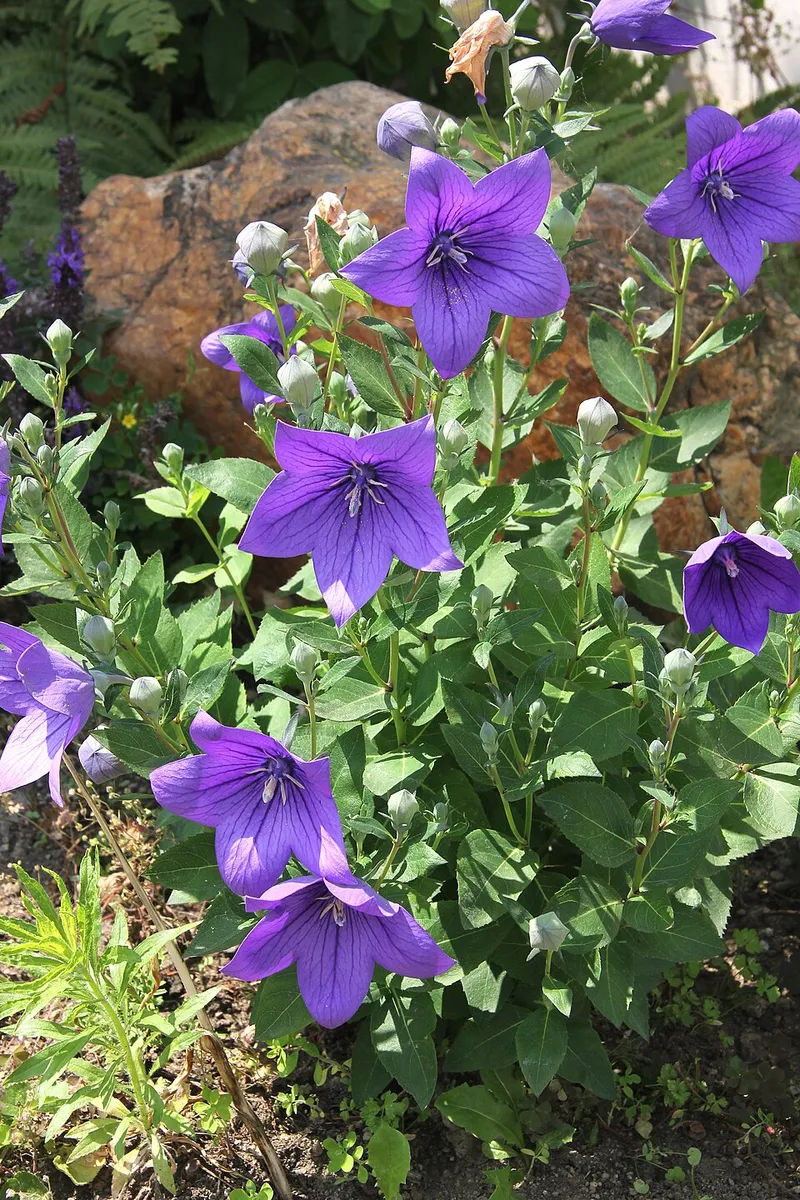
About platycodon
Platycodon (Platycodon grandiflorus)
Balloon Flower
Full sun to part shade, medium moisture, well-drained loam; tolerates clay with moderate drainage; pH 5.5-7.0.
1-3 feet tall by 1-1.5 feet wide depending on cultivar; blooms midsummer (July-August in Middle Tennessee) with large balloon-shaped buds opening to star-shaped blue, white, or pink flowers; slow to emerge in spring, mark placement to avoid disturbing the taproot; spreads minimally by seed; long-lived once established.
Avoid disturbing the fleshy taproot; plant in spring and do not divide, plants resent root disturbance and are best left undisturbed for many years.
Native region: Not native to Tennessee; ornamental introduction from eastern Asia (China, Japan, Korea, eastern Siberia).
Balloon flower is among the most reliably perennial ornamentals for the Zone 6b/7a transition zone. The midsummer bloom period fills a gap between the spring and fall perennial waves. The taproot makes it drought-tolerant once established but intolerant of transplanting. It emerges late in spring, as late as May in Middle Tennessee, and is easily damaged by overzealous spring cleanup; mark planting sites with durable labels. Compact cultivars such as 'Sentimental Blue' and 'Astra Blue' are less prone to flopping than tall single-stemmed selections. Deer occasionally browse emerging shoots; mature plants with toughened foliage are rarely damaged.
Quick Facts
- Common Name
- platycodon
- Scientific Name
- Platycodon grandiflorus
- Plant Type
- Perennial
- Region
- Middle Tennessee