About Perennial Begonia
Perennial Begonia (Begonia grandis)
Hardy Begonia
Part shade to full shade, medium to moderately moist moisture level, organically rich, well-drained soil; moderately acid pH preferred.
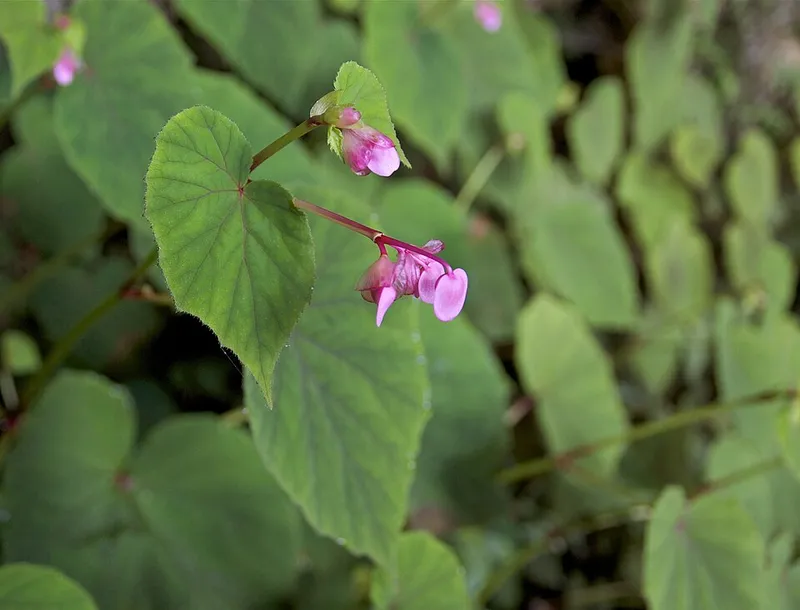
18-24 inches tall, blooms late summer to fall (August-October in Middle Tennessee) with pendulous clusters of pale pink or white flowers; spreads by bulbils (small bulb-like structures produced in leaf axils) that drop and self-propagate; also spreads by seed.
Bulbils collected in fall can be stored dry and replanted in spring; established plants emerge late, often not until late May in Zone 6b.
Native region: Not native to Tennessee; ornamental introduction from eastern Asia (China, Japan).
Perennial begonia is the only reliably hardy begonia for Middle Tennessee and fills a genuine gap, a shade-tolerant perennial that blooms in August and September when most shade plants have finished. The pendulous pink flowers and attractive red-veined leaves are distinctive. Plants die completely to the ground after first frost and re-emerge very late in spring, which leads to frequent accidental disturbance; mark planting sites clearly. The bulbil-propagation mechanism means established plantings gradually self-spread to fill shaded areas without becoming invasive. Consistent moisture is important; the species will not tolerate drought in full shade. Provides some deer resistance due to the mild astringency of the foliage.
Quick Facts
- Common Name
- Perennial Begonia
- Scientific Name
- Begonia grandis
- Plant Type
- Perennial
- Region
- Middle Tennessee