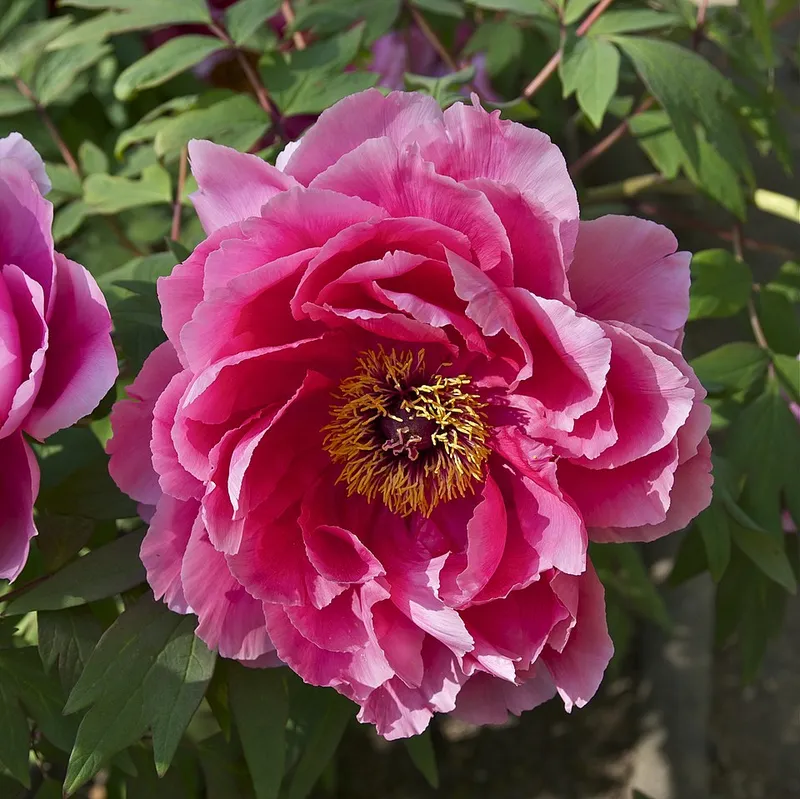
About peony
Peony (Paeonia lactiflora)
Chinese Peony, Garden Peony
Full sun to light shade, medium moisture, well-drained fertile loam; tolerates clay if drainage is adequate; pH 6.5-7.0 preferred.
2-3 feet tall and wide; blooms late spring (May-early June in Middle Tennessee) with large fragrant flowers in white, pink, red, and bicolor; dies back to the ground each winter; spreads minimally from established crown; clumps are long-lived and improve with age.
Propagation by division in fall; plant eyes no more than 1-2 inches below soil surface, planting too deep is the most common cause of failure to bloom.
Native region: Not native to Tennessee; ornamental introduction from China and Siberia.
Herbaceous peonies are reliably hardy through Zone 6b/7a and represent one of the longer-lived perennials available for Middle Tennessee gardens. The primary cultural challenge is the humid summer climate, which promotes Botrytis blight (Botrytis paeoniae), a grey mold that blackens stems and buds during wet springs. Good air circulation, prompt removal of infected tissue, and avoiding overhead irrigation reduce disease pressure. Ants on buds are not harmful; they feed on nectar exuded by the flower buds. Avoid planting near turf areas receiving heavy pre-emergent herbicide applications, as some products can suppress peony growth when applied close to the crown.
Quick Facts
- Common Name
- peony
- Scientific Name
- Paeonia lactiflora
- Plant Type
- Perennial
- Region
- Middle Tennessee