About dianthus
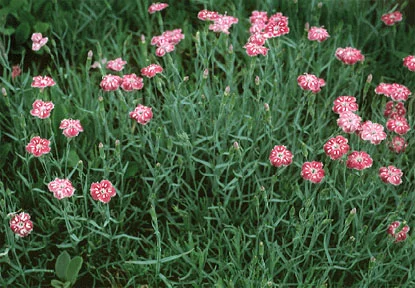
Dianthus (Dianthus plumarius)
Cottage Pink, Grass Pink, Feathered Pink
Full sun, dry to medium moisture, well-drained alkaline to neutral soil; pH 6.5-7.5; requires excellent drainage and good air circulation, does not tolerate wet clay or high humidity without these conditions.
12-18 inches tall by 12 inches wide; blooms late spring (May-June in Middle Tennessee) with fragrant fringed flowers in white, pink, and bicolor on blue-grey evergreen foliage; spreads slowly by stem layering; clumps are short-lived but cuttings root readily.
Propagate by stem cuttings taken in June-July after bloom; root in sharp sand.
Native region: Not native to Tennessee; ornamental introduction from central and southern Europe.
Cottage pinks have been grown in American gardens since colonial times and are reliably perennial in Zone 6b/7a when site drainage is adequate. The dense blue-grey foliage is clove-fragrant when disturbed, making it effective for edging garden paths. In the heavy clay soils of the Columbia area, pinks perform best in raised beds amended with pea gravel and coarse sand to ensure rapid drainage after rain. High humidity promotes crown rot and Fusarium wilt; avoid overhead irrigation and plant at the top of any slope or bed. The cultivar 'Bath's Pink' is widely recommended for southeastern heat and humidity tolerance and is substantially more reliable in Middle Tennessee than seed-grown mixes.
Quick Facts
- Common Name
- dianthus
- Scientific Name
- Dianthus plumarius
- Plant Type
- Perennial
- Region
- Middle Tennessee