About Canna Lily
Canna Lily (Canna spp.)
Garden Canna, Indian Shot
Full sun, medium to wet moisture level, tolerates heavy clay and wet soils; adaptable pH from moderately acid to neutral.
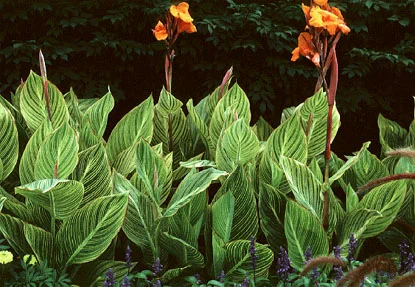
3-8 feet tall depending on cultivar, blooms summer through frost with red, orange, yellow, pink, or bicolor flowers; large paddle-shaped leaves are green, bronze, or variegated; spreads by thick rhizomes to form clumps.
Divide rhizomes in spring after last frost; each division needs at least one eye. In Zone 6b, rhizomes may survive mild winters in the ground with 3-4 inches of mulch, but reliable overwintering requires lifting after first frost, drying, and storing at 40-50°F.
Native region: Not native to Tennessee; tropical and subtropical introduction from Central and South America; widely hybridized.
Canna thrives in Middle Tennessee's humid summers and performs particularly well in poorly drained areas where many other perennials fail, low spots, rain gardens, and the wet clay margins common along the I-65 corridor. The large tropical foliage holds up through the full summer heat. Rhizome survival overwinter in-ground depends on the specific winter: Zone 7a sites in Columbia typically allow in-ground overwintering with mulch, while colder Zone 6b microclimates require lifting. Leaf roller caterpillars (Calpodes ethlius) and Japanese beetles can damage foliage mid-season; neither is fatal but both are common in Middle TN. Remove spent flower stalks to keep the plant producing new blooms.
Quick Facts
- Common Name
- Canna Lily
- Scientific Name
- Canna spp.
- Plant Type
- Perennial
- Region
- Middle Tennessee