About Blackberry Lily
Blackberry Lily (Belamcanda chinensis)
Leopard Flower · now reclassified as Iris domestica
Full sun to part shade, medium to moderately dry moisture, well-drained average garden soil, slightly acid to neutral pH.
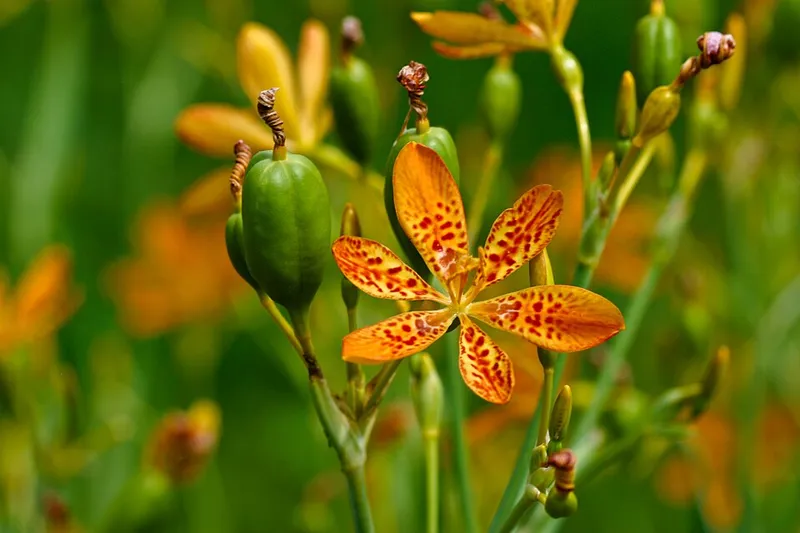
2-3 feet tall, blooms in summer with orange flowers spotted with red; seed capsules split open in fall to expose shiny black seeds resembling a blackberry cluster; spreads by self-seeding and short rhizomes.
Germination Code: A, surface-sow or lightly cover; blooms first or second year from seed. Division in early spring every 3-4 years maintains vigor.
Native region: Not native to Tennessee; ornamental introduction from China and Japan, naturalized in parts of the eastern United States.
Blackberry lily thrives in the hot, sunny conditions of Middle Tennessee summers, performing well in the well-drained slopes and raised beds common around Columbia-area homes. The fan-shaped iris-like foliage is attractive all season; the spent seed pods are often cut for dried arrangements. Wet clay soils with poor drainage are the primary failure mode, rhizomes rot in waterlogged sites over winter. Deer generally avoid it. Short-lived as an individual plant (3-5 years) but self-seeds freely enough to maintain a colony if seed heads are left in place.
Quick Facts
- Common Name
- Blackberry Lily
- Scientific Name
- Belamcanda chinensis
- Plant Type
- Perennial
- Region
- Middle Tennessee