About Bee Balm
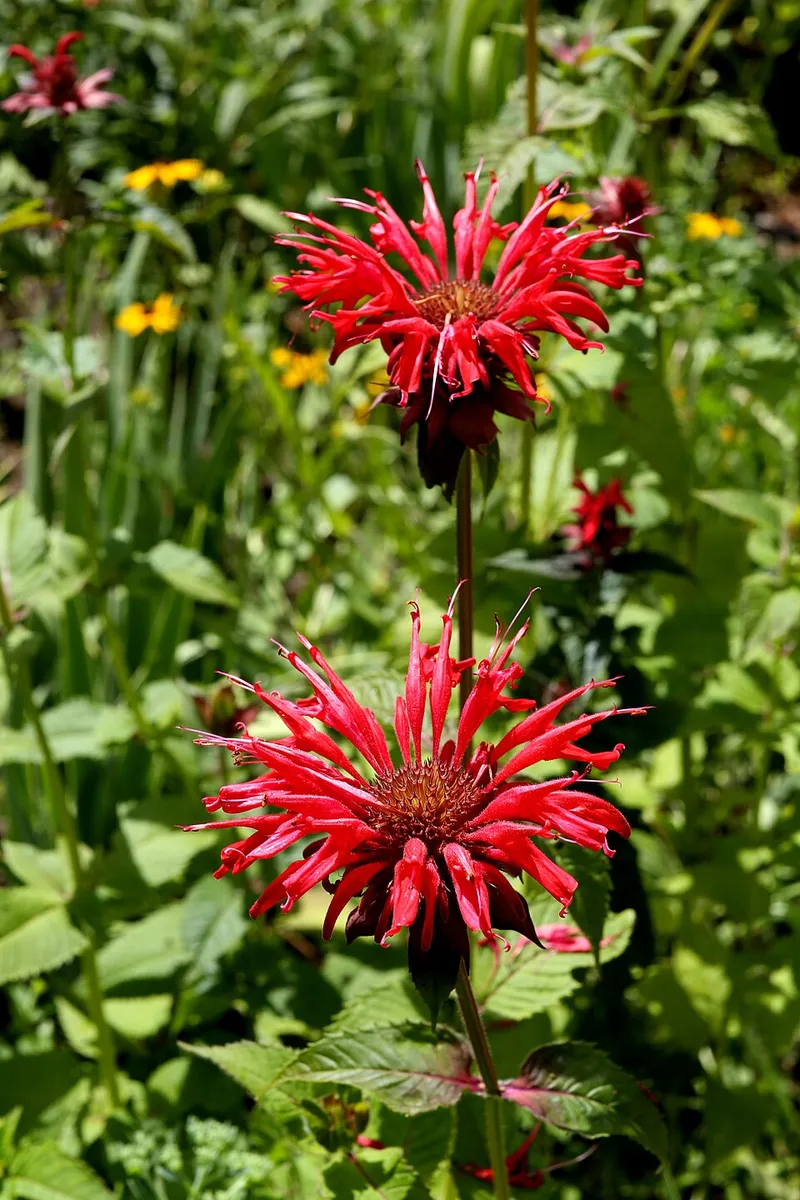
Bee Balm (Monarda didyma)
Scarlet Bee Balm, Oswego Tea
Full to part sun, moderately wet to medium moisture level, prefers rich humusy soil, acidic pH.
2-4 feet tall, blooms mid to late summer (July-August in Middle Tennessee) with bright red tubular flower heads; spreads readily by rhizomes and re-seeding to form expanding colonies in favorable sites.
Germination Code: A, surface sow, light required for germination. Divide clumps every 3-4 years to prevent overcrowding and reduce mildew susceptibility.
Native region: Blue Ridge Province in Tennessee; cultivated forms widely adapted across the state.
Bee balm is highly susceptible to powdery mildew (Golovinomyces monardae), a significant problem in Middle Tennessee's humid summers where nighttime dew keeps foliage wet for 8-12 hours. Mildew-resistant cultivars such as 'Jacob Cline' (red) or 'Marshall's Delight' (pink) are strongly recommended over straight species for Columbia-area gardens. Good air circulation is essential: space plants 18-24 inches apart and avoid overhead irrigation. Despite the mildew risk, the mid-summer red flowers are one of the most reliable hummingbird attractants available in Zone 6b/7a. Remove spent flower heads before seed sets to reduce aggressive self-seeding. Deer generally avoid it due to the strong mint-family fragrance.
Quick Facts
- Common Name
- Bee Balm
- Scientific Name
- Monarda didyma
- Plant Type
- Perennial
- Region
- Middle Tennessee