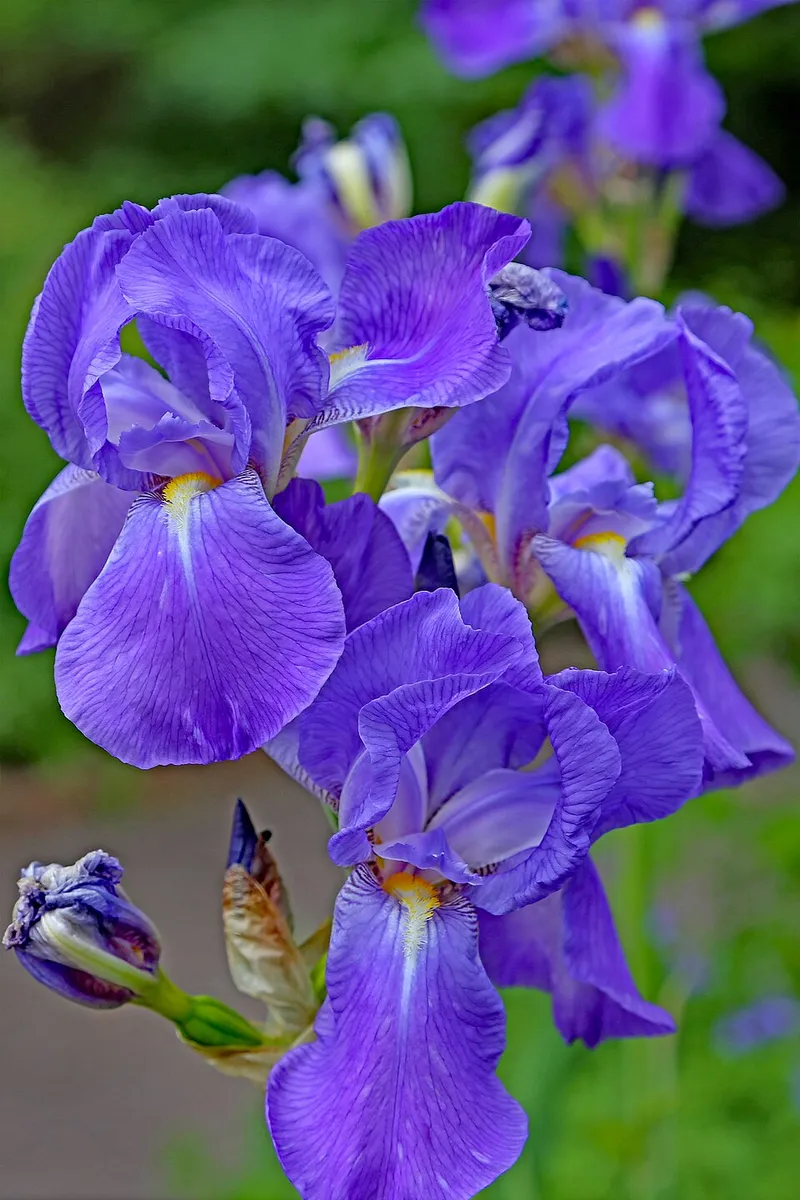
About Bearded Iris
Bearded Iris (Iris germanica)
German Iris, Flag Iris
Full sun minimum 6 hours; dry to medium moisture; well-drained, slightly alkaline to neutral soil, does not tolerate wet feet; pH 6.5-7.5.
2-4 feet tall depending on cultivar classification (miniature dwarf through tall bearded); blooms late spring, typically April-May in Middle Tennessee; flowers in nearly every color; rhizomes multiply annually to form expanding clumps.
Divide rhizomes every 3-4 years in July-August (immediately after bloom season ends); replant with the top of the rhizome at or just above the soil surface, burying rhizomes causes rot.
Native region: Not native to Tennessee; ornamental introduction of complex hybrid origin, primarily from European and central Asian species.
Bearded iris performs reliably in Middle Tennessee's climate, with the spring bloom coinciding well with the region's mild April-May weather before summer heat arrives. The critical cultural requirement in the clay-heavy soils around Columbia is drainage: rhizomes exposed to standing water, especially from May through August, develop bacterial soft rot (Erwinia carotovora) that can destroy an entire clump in days. Raised planting, avoiding overhead irrigation, and full sun exposure are the practical controls. Iris borer (Macronoctua onusta) is the most common insect pest, larvae tunnel into rhizomes from May onward; inspect divisions at replanting time and cut out any soft, discolored tissue. Division is essential for continued flowering; crowded clumps produce fewer blooms.
Quick Facts
- Common Name
- Bearded Iris
- Scientific Name
- Iris germanica
- Plant Type
- Perennial
- Region
- Middle Tennessee