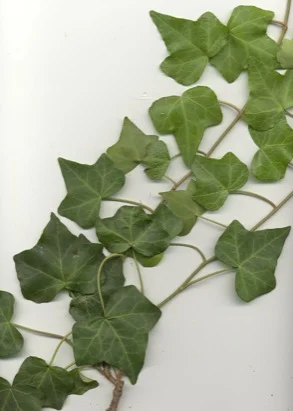
About English Ivy
English Ivy (Hedera helix)
Full sun to full shade, moderately moist to well-drained; tolerates clay and drought once established; pH 5.5-7.5; most vigorous in part shade with consistent moisture but adapts widely.
15-20 cm as a groundcover mat; spreads by rooting stems to cover large areas; evergreen; arboreal (adult) phase produces insignificant flowers in fall on climbing stems, berries are mildly toxic.
Stem cuttings root easily at any time of year; rooted sections transplant directly.
Native region: Not native to Tennessee; ornamental introduction from Europe; classified as invasive in Tennessee by the Tennessee Exotic Pest Plant Council due to aggressive spread into forested areas.
English ivy remains widely planted across Middle Tennessee despite its invasive classification. In managed landscape beds it provides reliable evergreen coverage under trees and on slopes, but it spreads aggressively beyond its intended area and climbs tree trunks, ivy that reaches the arboreal phase in tree canopies can significantly increase wind-throw risk and should be cut at the base and allowed to die. The Tennessee Exotic Pest Plant Council recommends against new plantings near natural areas. Bacterial leaf scorch and a fungal leaf spot (Xanthomonas spp.) cause sporadic dieback in humid Middle Tennessee summers; improve air circulation and avoid overhead irrigation when possible. Native alternatives including Pachysandra procumbens and Asarum canadense provide similar function without invasive risk.
Quick Facts
- Common Name
- English Ivy
- Scientific Name
- Hedera helix
- Plant Type
- Groundcover
- Region
- Middle Tennessee