About Hardy Plumbago
Hardy Plumbago (Ceratostigma plumbaginoides)
Leadwort
Full to part sun, well-drained to moderately dry, tolerates clay if drainage is adequate; pH 5.5-7.0.
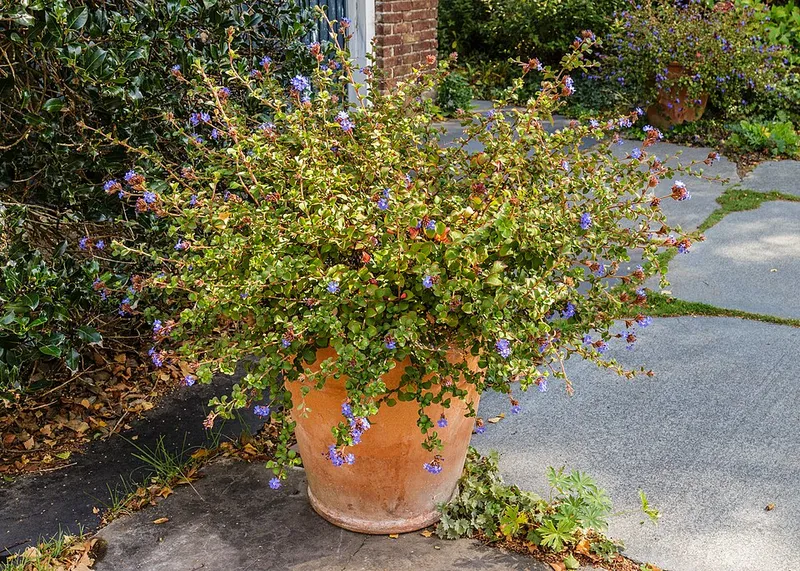
15-20 cm tall, spreading 45-60 cm wide; blooms late summer to hard frost (August-October) with deep cobalt-blue flowers; spreads by rhizomes to form a dense mat, going deciduous after first frost.
Division in spring after new growth emerges is the standard propagation method; stem cuttings root under mist in early summer.
Native region: Not native to Tennessee; ornamental introduction from western China.
One of the few groundcovers that delivers reliable late-season color in Middle Tennessee, carrying bloom well into October after most perennials have finished. The foliage turns burgundy-red before dormancy, adding a second ornamental value. Establishment in Zone 6b/7a is reliable but slow in the first season, plants may appear dead in spring; wait until late April before writing them off, as emergence from rhizomes is often delayed. Performs well on dry slopes and under shallow-rooted trees where consistent moisture is unavailable. Deer largely avoid it. Avoid heavy mulching over the crown, which can cause winter rot in the clay soils common around Columbia and Spring Hill.
Quick Facts
- Common Name
- Hardy Plumbago
- Scientific Name
- Ceratostigma plumbaginoides
- Plant Type
- Groundcover
- Region
- Middle Tennessee