About Wild Ginger
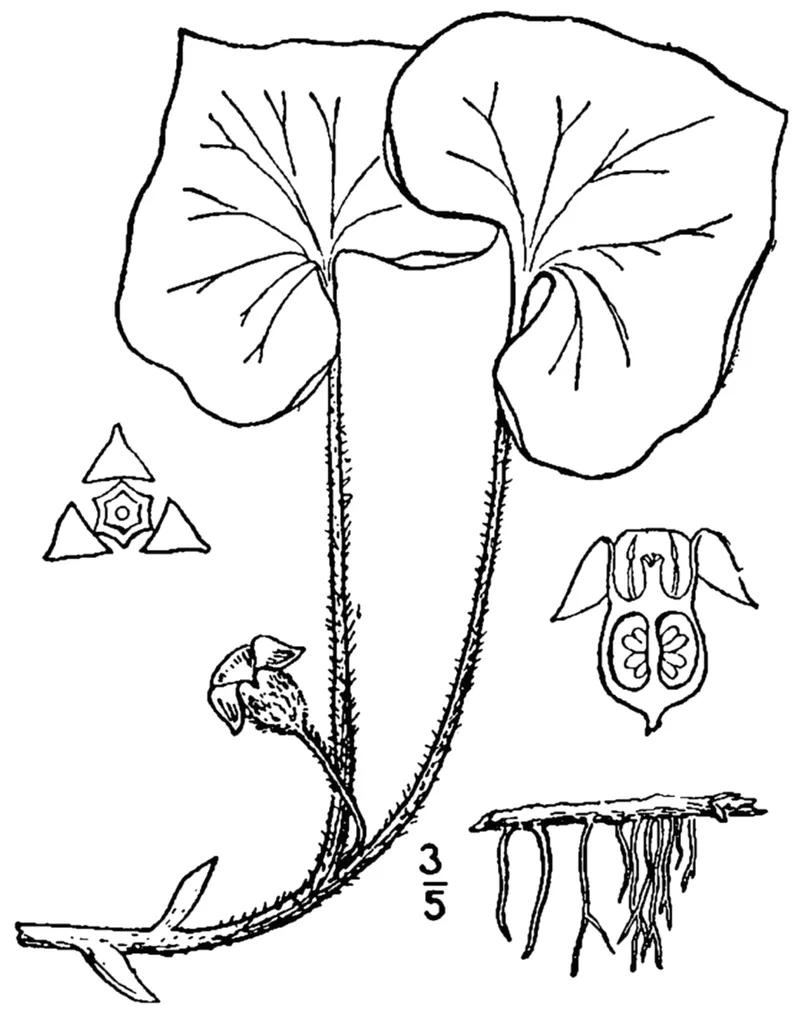
Wild Ginger (Asarum canadense)
Canadian Wild Ginger
Full shade, moderately wet to moderately dry moisture level; prefers rich, humus-rich soil; neutral pH; does not tolerate full sun or dry exposed sites.
10-15 cm tall; large heart-shaped leaves spread by rhizomes to form a dense, weed-suppressing mat; blooms in spring with small brown jug-shaped flowers hidden beneath the foliage; deciduous, disappearing after hard frost.
Germination Code: L, E. Division is the easiest propagation method; self-sows in suitable moist, shaded conditions.
Native region: Statewide in Tennessee in moist deciduous woodland; common under beech, maple, and tulip poplar in Middle Tennessee including sites around Columbia and Lewisburg.
Wild ginger is one of the most effective native groundcovers for deep shade under established deciduous trees in Middle Tennessee, the broad leaves form a dense canopy that suppresses most weeds when planted at 20-25 cm on center spacing. Unlike non-native alternatives, it integrates naturally with native woodland understory plantings and provides habitat value. Root division and transplanting are straightforward in fall or very early spring. The aromatic rhizomes smell distinctly of ginger when cut. Deer generally avoid it. Establishment requires consistent moisture in the first season; once rhizomes are established the plant is reliably drought-tolerant for a shade-lover.
Quick Facts
- Common Name
- Wild Ginger
- Scientific Name
- Asarum canadense
- Plant Type
- Groundcover
- Region
- Middle Tennessee