About Creeping Myrtle
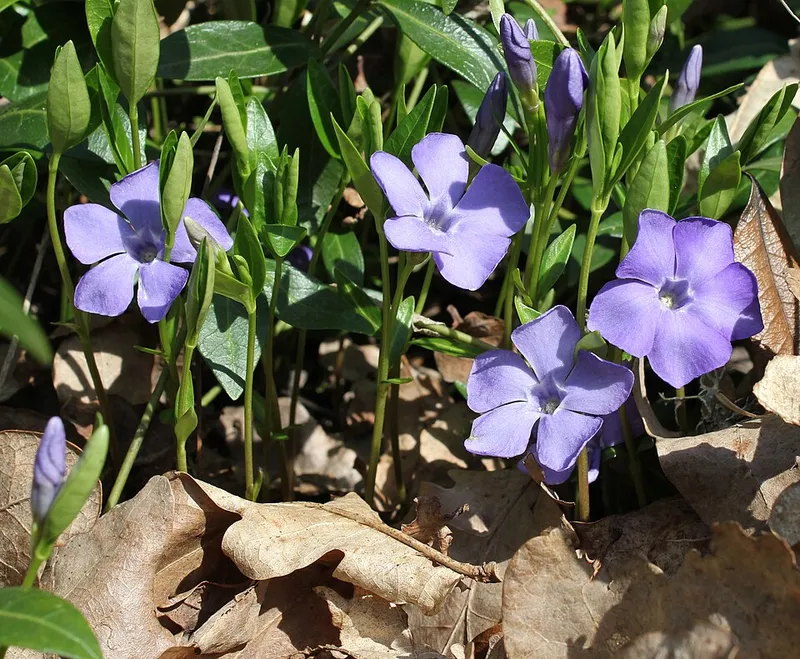
Creeping Myrtle (Vinca minor)
Common Periwinkle, Myrtle
Full sun to full shade, moderately moist to well-drained; tolerates clay; pH 5.5-7.5; most vigorous in part shade with consistent moisture but adapts to dry shade under established trees.
10-15 cm tall; spreads indefinitely by trailing stems that root at nodes; blooms March-May with lavender-blue to white flowers; evergreen.
Stem cuttings in summer or division of rooted trails in fall; rooted sections transplant directly without special treatment.
Native region: Not native to Tennessee; ornamental introduction from southern Europe; widely naturalized in Tennessee woodland margins and considered invasive by the Tennessee Exotic Pest Plant Council.
One of the most commonly planted groundcovers in Middle Tennessee for its adaptability across sun and shade conditions and reliable evergreen coverage. Classified as invasive in many parts of Tennessee due to spread into natural woodland areas, avoid planting adjacent to natural areas, greenways, or creek corridors in the Columbia and Franklin areas where woodland fragments are nearby. Under trees and in contained landscape beds, the dense mats effectively suppress weeds and tolerate root competition. A fungal stem canker (Phoma spp.) can cause dieback in dense plantings; improve air circulation by thinning every few years. Shear the entire planting with a mower set high in early spring before bloom to remove old growth and promote fresh, dense regrowth.
Quick Facts
- Common Name
- Creeping Myrtle
- Scientific Name
- Vinca minor
- Plant Type
- Groundcover
- Region
- Middle Tennessee