About Arizona Cypress
Arizona Cypress (Cupressus arizonica)
Blue Arizona Cypress, Rough-barked Arizona Cypress
Full sun, dry to moderately dry, well-drained soils required, does not tolerate wet feet; tolerates clay only when drainage is excellent; pH 6.0-8.0.
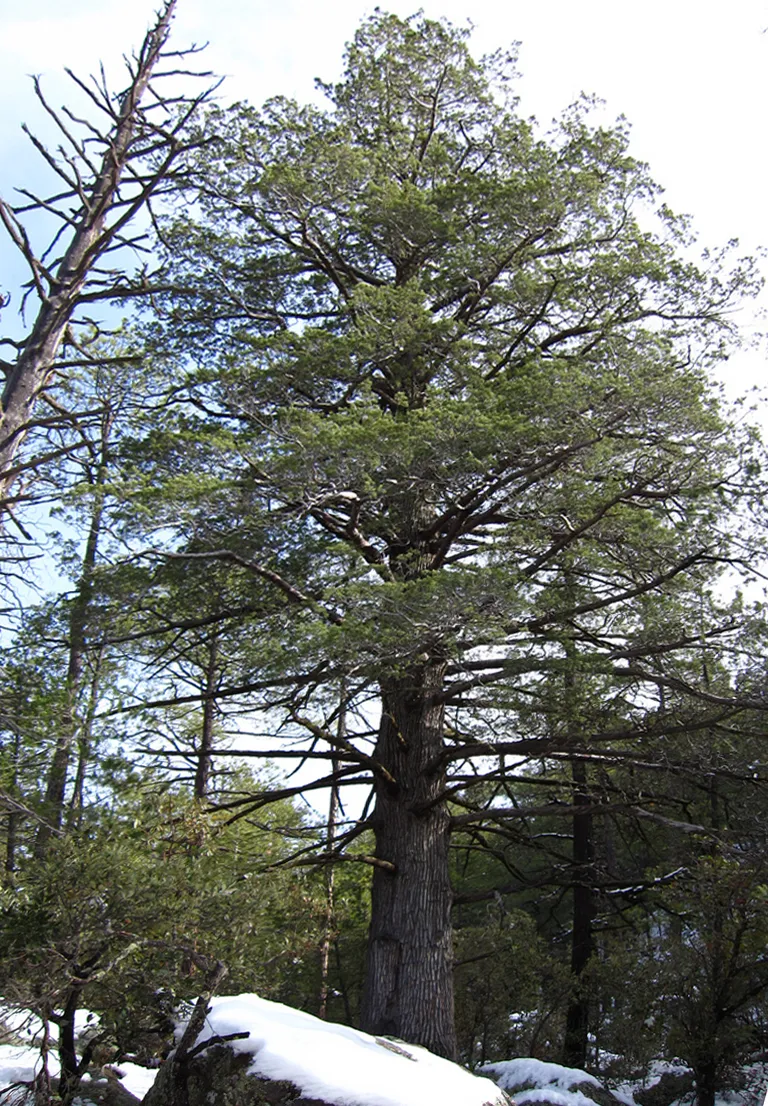
Landscape trees in Tennessee typically reach 20-25 feet over 15-20 years; can eventually exceed that in ideal conditions; silver-blue foliage; flowers inconspicuous; seed cones persist on branches for 2+ years.
Propagation: seed, no cold stratification required; cuttings moderately difficult.
Native region: Not native to Tennessee; native to the southwestern United States and northern Mexico; used as a landscape conifer in the Mid-South.
Arizona cypress is planted in Middle Tennessee primarily as a fast-growing evergreen screen or windbreak, where it fills the role that Leyland cypress plays in moister climates, but with substantially better drought tolerance once established. The chief failure mode in Zone 7a is planting in poorly drained or heavy clay sites without adequate amendment; roots that sit in water during winter wet periods will decline quickly. Bagworms (Thyridopteryx ephemeraeformis) are a serious annual threat across all conifers in Middle Tennessee, colonies left untreated through July can consume entire branch tips. Canker (Seiridium spp.) lesions appear as resinous, discolored bark patches and spread rapidly in stressed trees; no curative treatment is available, making proper siting and soil drainage the best prevention.
Quick Facts
- Common Name
- Arizona Cypress
- Scientific Name
- Cupressus arizonica
- Plant Type
- Shrub
- Region
- Middle Tennessee