Why It Is Genuinely Hard to Kill
Selective herbicides work by hitting broadleaf plants and leaving grasses alone. That is how I spray a whole yard without killing it. Dallisgrass is a grass and so is your tall fescue, close enough relatives that most chemistry cannot tell them apart, which is why the shelf that handles dandelion and clover has almost nothing on it for this.
That pushes people toward glyphosate, and I want to head that off. Roundup will brown it. It will not finish it. Dallisgrass and Johnson grass both bounce back, and plenty of perennial weeds have drifted toward outright resistance. You know what does not bounce back? The tall fescue right beside it that you also killed. Even where glyphosate eventually wins you are repeating it for two or three years and collecting dead holes the whole time.
The Window Is Open Right Now
Dallisgrass gets killed late summer into early fall. That is the window. Not May, and not June when you first notice it and want it gone that week. Late summer into early fall, when the plant is pulling resources back down into the crown and will carry chemistry down with them.
The tool is topramezone, sold as Pylex by BASF. It is a Group 27 herbicide, meaning it shuts down carotenoid production, and the symptom is unmistakable: treated tissue turns white rather than brown, within days. It is labeled for tall fescue and the other cool season grasses, which is the whole reason it exists as an option here. The label also wants an oil adjuvant, no mowing for two days afterward, and repeat applications rather than one and done.
I will be straight about something the manufacturer is straight about. BASF claims suppression of dallisgrass, not control, from multiple applications at the end of the growing season. Suppression is the honest word. You knock the plant back hard, repeatedly, and you keep coming back.
The other half is discipline, and it is the half that gets skipped. This is spot treatment work, plant by plant, the same way I handle Johnson grass. Somebody has to find the clumps and hit them, then come back later and find the survivors.
What Three to Five Years Actually Means
On a lawn that came in heavily contaminated, clearing dallisgrass takes me three to five years. UC IPM lands in the same place in different words: difficult, tedious, usually several years. I would rather tell you that in August than sell you a season and disappoint you in June.
So if you have clumps in the yard right now, this year you get your passes in while the window is open. You will still have dallisgrass next June, less of it, and next fall you do it again. Anybody promising a clean yard by spring is either not looking at the same plant or is planning to spray glyphosate and hand you the bare spots.
Do Not Plant It Again This Fall
The reason I am particular about seed is sitting in these yards. If you are seeding this fall, do not use straw as cover, and do not buy Kentucky 31 or contractor mix. Read the tag, look for 0.00 percent other crop seed, and buy blue tag certified at minimum. If the cultivar names on the bag do not turn up in NTEP trial results, that bag does not belong on a lawn you intend to keep. I publish the exact cultivars I put down so anybody can check them against the trial data.
That is the mechanism, not a preference. Dense fescue keeps the next round of weed seed from finding open soil, and a thin stand is how all of this starts. The aeration and seeding work and the weed control side of the program are the same job from two directions.
If You Are Standing In It Right Now
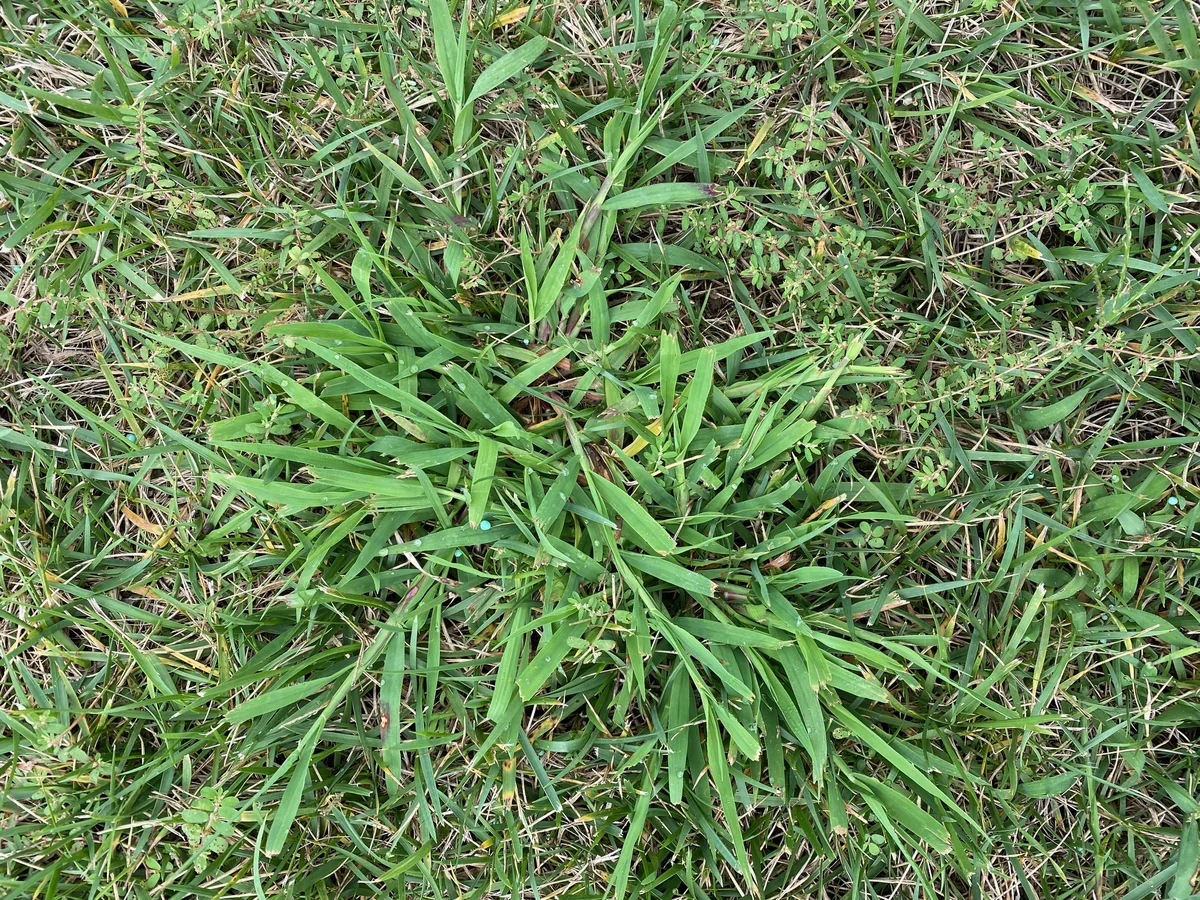
Go look at a clump. If the blades radiate straight out of a tight crown and run wider than everything around them, it is dallisgrass, the window is open for a few more weeks, and it is not your mowing service's fault.
I treat this across Columbia, Spring Hill, Franklin, Thompsons Station, and the rest of the I-65 corridor. If you want it confirmed in person and an honest number of years for your yard, call (615) 490-4082 or email [email protected].
Sources