About Stonecrop
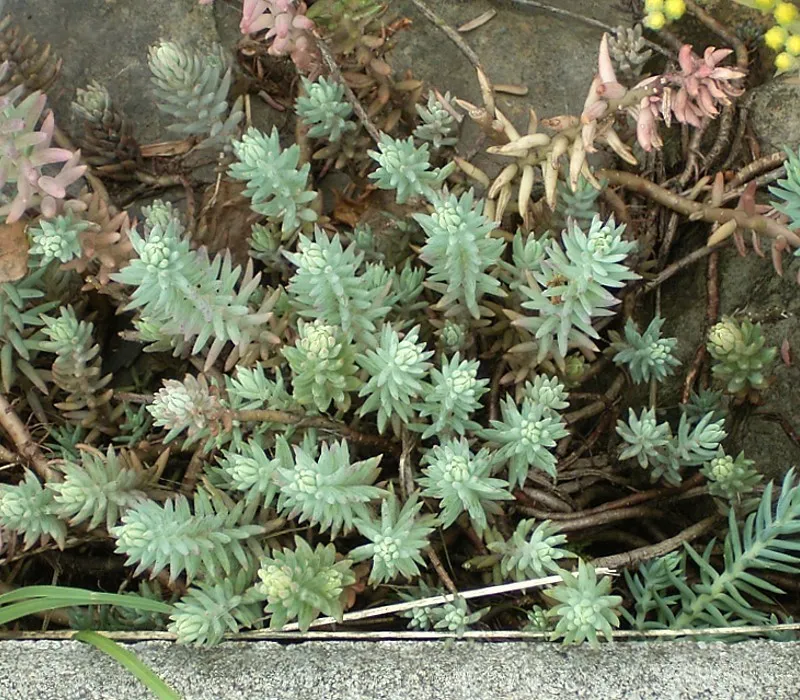
Stonecrop (Sedum rupestre)
Reflexed Stonecrop, Jenny's Stonecrop, Pork-and-Beans
Full sun, dry to moderately dry, excellent drainage essential; tolerates rocky and sandy soils; pH 5.5-7.0; high heat and drought tolerance once established.
10-20 cm tall, spreading indefinitely by creeping stems; blooms June-July with yellow star-shaped flowers; spreads by detached stem segments rooting wherever they contact soil.
Propagation by stem cuttings is nearly effortless, a detached shoot laid on bare soil roots within weeks.
Native region: Not native to Tennessee; European species naturalized on rocky waste sites and disturbed ground across the eastern United States.
Among the most drought-tolerant groundcovers available for Middle Tennessee landscapes. Performs particularly well on slopes, rock walls, and gravel areas where soil moisture stays consistently low, conditions that kill most other groundcovers. In the heavy clay soils common around Columbia and Spring Hill, raised beds or gravel-amended planting pockets are necessary; wet clay in winter causes root and crown rot. The cultivar 'Angelina' with chartreuse-gold foliage turning orange in fall is widely used for textural contrast. No significant pest or disease problems under dry conditions. Overwatering or shade produces lanky, floppy growth; full sun and lean soil keep plants compact and tight.
Quick Facts
- Common Name
- Stonecrop
- Scientific Name
- Sedum rupestre
- Plant Type
- Groundcover
- Region
- Middle Tennessee