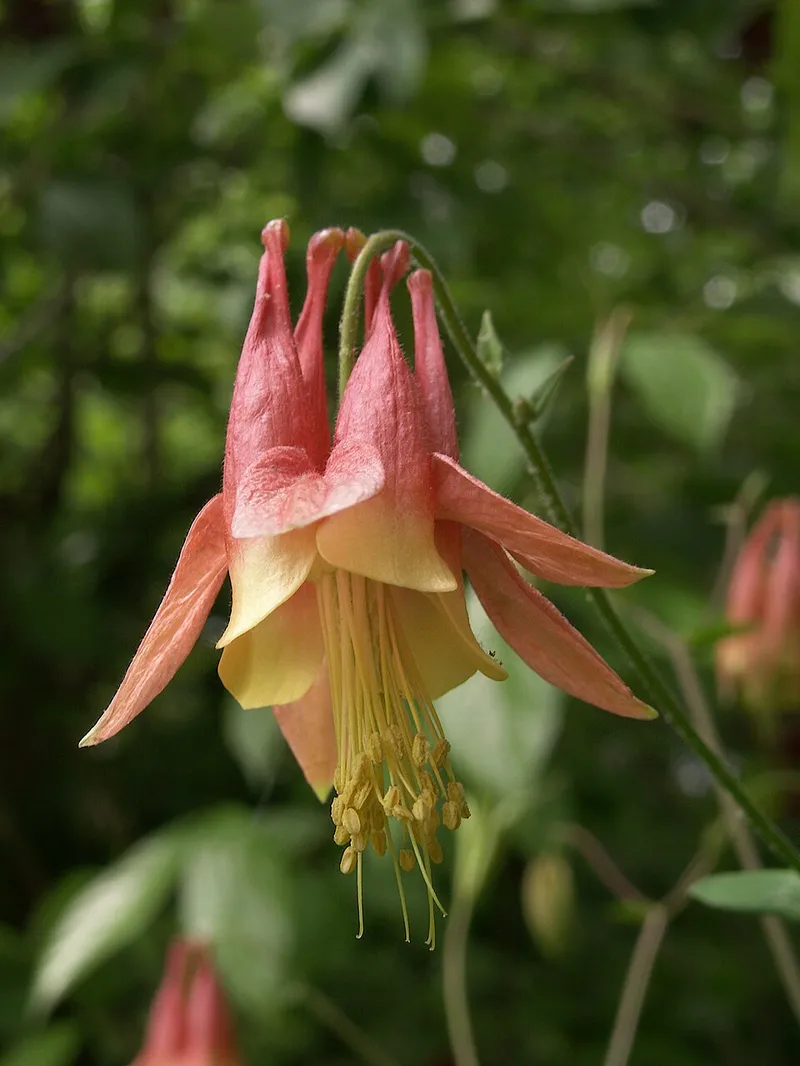
About Native Columbine
Native Columbine (Aquilegia canadensis)
Eastern Columbine, Wild Columbine
Full sun to full shade, medium to dry moisture level; tolerates a wide range of soils including clay; neutral to slightly alkaline pH; flowers most prolifically in part shade with adequate moisture.
45-60 cm tall; blooms March-May with nodding red and yellow spurred flowers; self-seeds readily in favorable sites, spreading to form loose colonies.
Germination Code: C (cold stratification, 30-60 days). Division is possible but self-seeding is the most reliable means of establishment and persistence.
Native region: Statewide in Tennessee; common in rocky woodland edges, cliff faces, and open deciduous forest across all three grand divisions.
One of the earliest-blooming natives for Middle Tennessee woodland gardens, overlapping with late daffodils and before most perennials emerge. The red-and-yellow flowers are a primary nectar source for ruby-throated hummingbirds (Archilochus colubris) migrating through the I-65 corridor in April and May. Foliage often develops leaf miner tunneling (Phytomyza spp.) by midsummer, creating blotchy patterns; plants typically go dormant and disappear by August, so inter-plant with later-emerging species to fill the void. Short-lived as an individual plant (2-3 seasons), but reliably self-perpetuating in loose soil where seeds can make contact with bare ground.
Quick Facts
- Common Name
- Native Columbine
- Scientific Name
- Aquilegia canadensis
- Plant Type
- Groundcover
- Region
- Middle Tennessee