About Italian Arum
Italian Arum (Arum italicum)
Italian Lords-and-Ladies, Painted Arum
Part shade to full shade, moderately moist to well-drained; tolerates clay; pH 5.5-7.0; summer-dormant, active October through May.
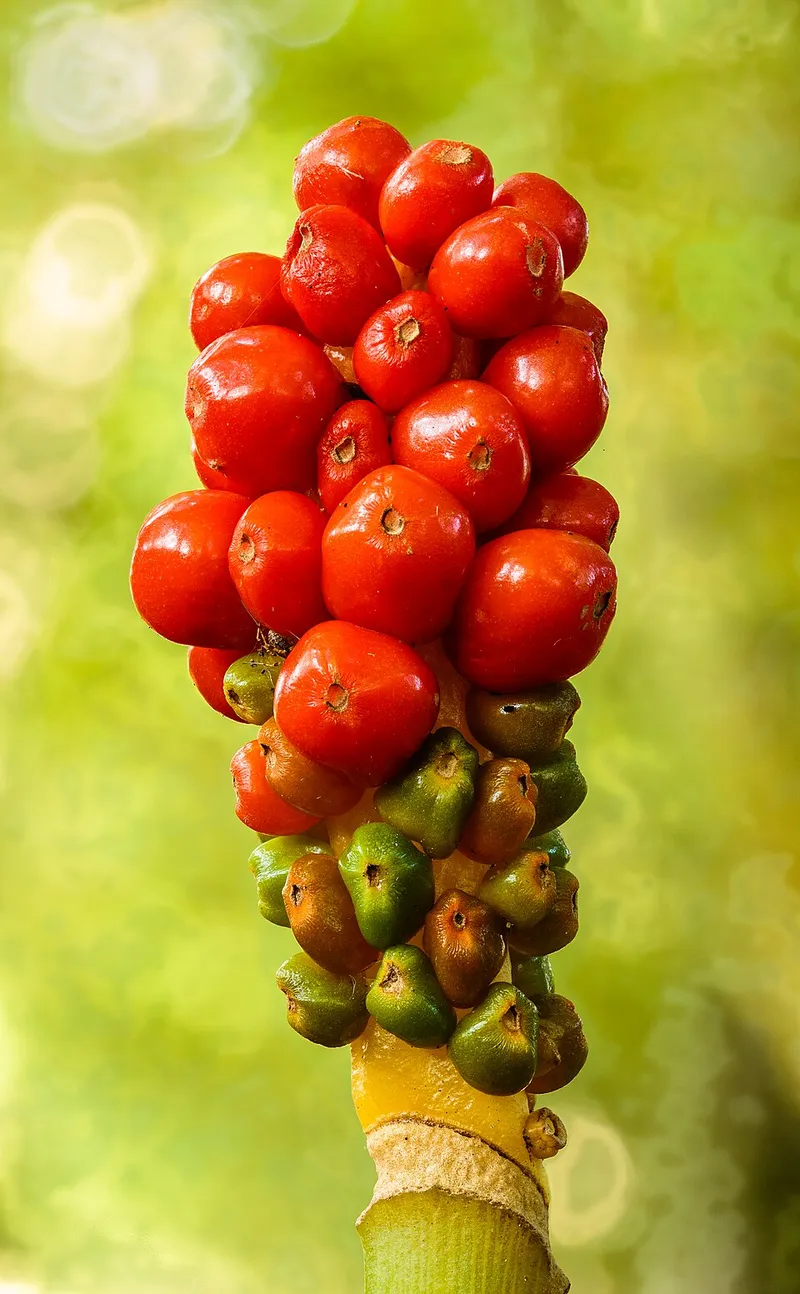
30-45 cm tall in leaf; arrow-shaped leaves with silver-green marbling emerge in fall and persist through spring; bloom inconspicuous in spring; bright orange-red berry clusters on bare stalks are conspicuous July-September after foliage dies back.
Division of offsets in summer dormancy (July-August) is the standard propagation method; berries are toxic and should not be used as seed sources in household gardens.
Native region: Not native to Tennessee; ornamental introduction from the Mediterranean region.
Italian arum is valued for its counter-seasonal leaf emergence, foliage appears in October when most perennials are dying back and persists through May, filling the ground plane under deciduous trees during the dormant season in Middle Tennessee. The silver-marbled leaves of the cultivar 'Pictum' are particularly ornamental. The toxic orange berries that follow dormancy provide late-summer interest but are a hazard around children and pets; this is worth noting when siting near play areas. Spreads steadily by offsets in suitable shaded, moist conditions, can become difficult to remove once established in preferred sites.
Quick Facts
- Common Name
- Italian Arum
- Scientific Name
- Arum italicum
- Plant Type
- Groundcover
- Region
- Middle Tennessee