About Creeping Thyme
Creeping Thyme (Thymus praecox)
Mother-of-Thyme, Wild Thyme
Full sun, dry to well-drained; tolerates poor, rocky, or sandy soils; pH 6.0-8.0; high drought tolerance; does not tolerate heavy clay, standing moisture, or shade.
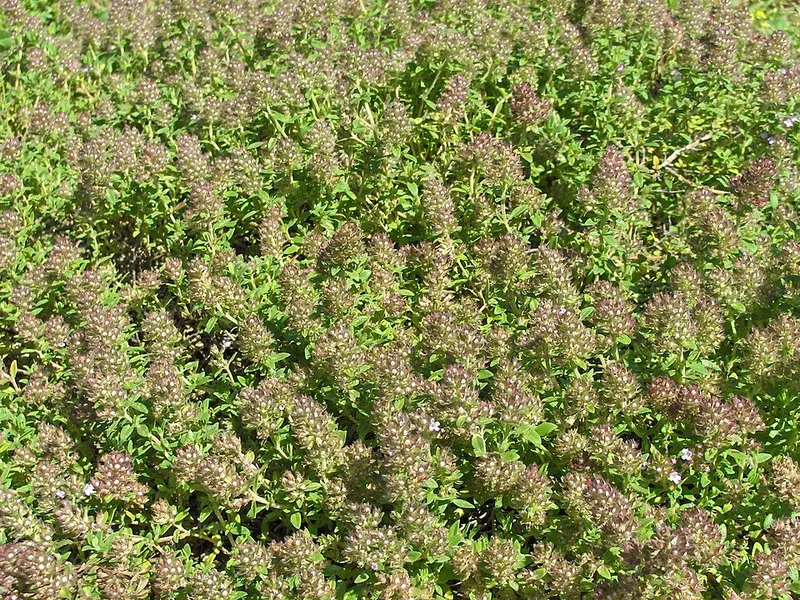
5-10 cm tall, spreading 30-45 cm wide; blooms May-July with dense clusters of tiny pink to purple flowers; semi-woody aromatic stems; spreads by creeping stems rooting at nodes and by seed.
Stem cuttings in early summer root easily; division in spring or fall.
Native region: Not native to Tennessee; introduced from the Mediterranean region; widely cultivated in herb gardens and rock landscapes across North America.
Creeping thyme is among the best options for filling joints between flagstone and pavers, dry slopes, and rock garden surfaces in Middle Tennessee where irrigation is unavailable. Foot traffic tolerance is moderate, occasional stepping causes no harm, but it will not withstand a true pedestrian path. The aromatic foliage releases fragrance when brushed. In the heavy clay soils common around Columbia and Lewisburg, install in raised beds or gravel-amended pockets, wet clay through winter causes crown rot and plant loss. The cultivar 'Elfin' is the most compact form at 3-5 cm, suitable between stepping stones. Bees work the flowers heavily. After bloom, shear lightly to prevent woody dieback in the center.
Quick Facts
- Common Name
- Creeping Thyme
- Scientific Name
- Thymus praecox
- Plant Type
- Groundcover
- Region
- Middle Tennessee