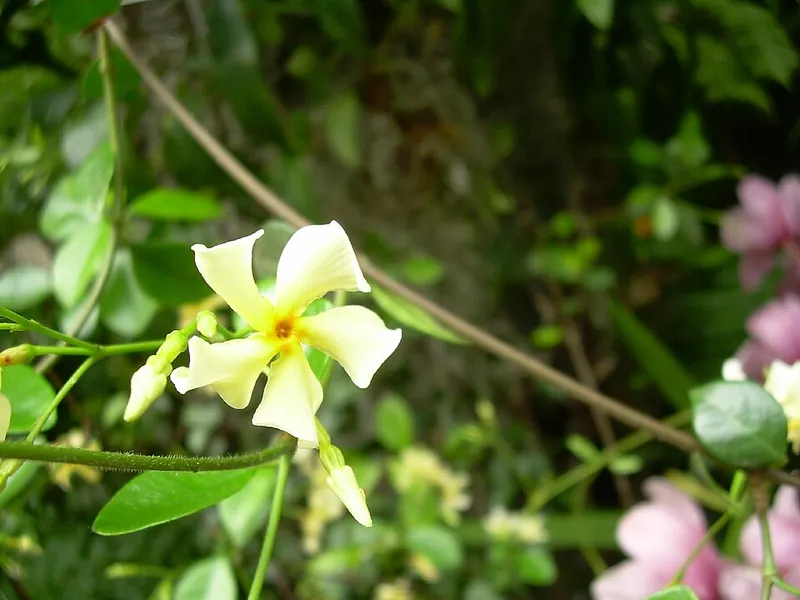
About Asian Jasmine
Asian Jasmine (Trachelospermum asiaticum)
Japanese Star Jasmine, Asian Star Jasmine
Full sun to full shade, moderately moist to well-drained; tolerates clay; pH 5.5-7.0; more cold-sensitive than star jasmine (T. jasminoides); thrives in Zone 7a but may suffer leaf burn in hard Zone 6b winters.
15-30 cm tall as a groundcover; spreads by trailing stems to form a dense, weed-suppressing mat; flowers inconspicuous (small, pale yellow, fragrant) in late spring; evergreen in Zone 7a, semi-evergreen to deciduous in colder Zone 6b sites.
Stem cuttings in summer root readily under mist; rooted layers separate easily from established mats.
Native region: Not native to Tennessee; ornamental introduction from Japan and Korea.
Asian jasmine is one of the best-performing low-maintenance evergreen groundcovers for the warmer portions of Middle Tennessee's Zone 7a band, sites in Franklin, Brentwood, and Spring Hill where winters rarely dip below -12°C. In exposed Zone 6b sites further south and at elevation, expect significant winter burn in severe years; foliage browns but plants typically resprout from the crown in April. Establishment from plugs or flats requires 2-3 growing seasons to achieve full coverage; maintain consistent irrigation in the first summer. Once established, the dense mat essentially eliminates weeding. Scale insects occasionally colonize stems in dense plantings; horticultural oil applied in late winter before new growth controls overwintering populations.
Quick Facts
- Common Name
- Asian Jasmine
- Scientific Name
- Trachelospermum asiaticum
- Plant Type
- Groundcover
- Region
- Middle Tennessee